
Gut hormone research and nanomedicine earn honorary doctorates
Professor Fiona Gribble and Professor Frank Caruso have been appointed honorary doctors of the University of Copenhagen in recognition of their outstanding contributions to health science research and their longstanding collaborations with researchers at the Faculty of Health and Medical Sciences.
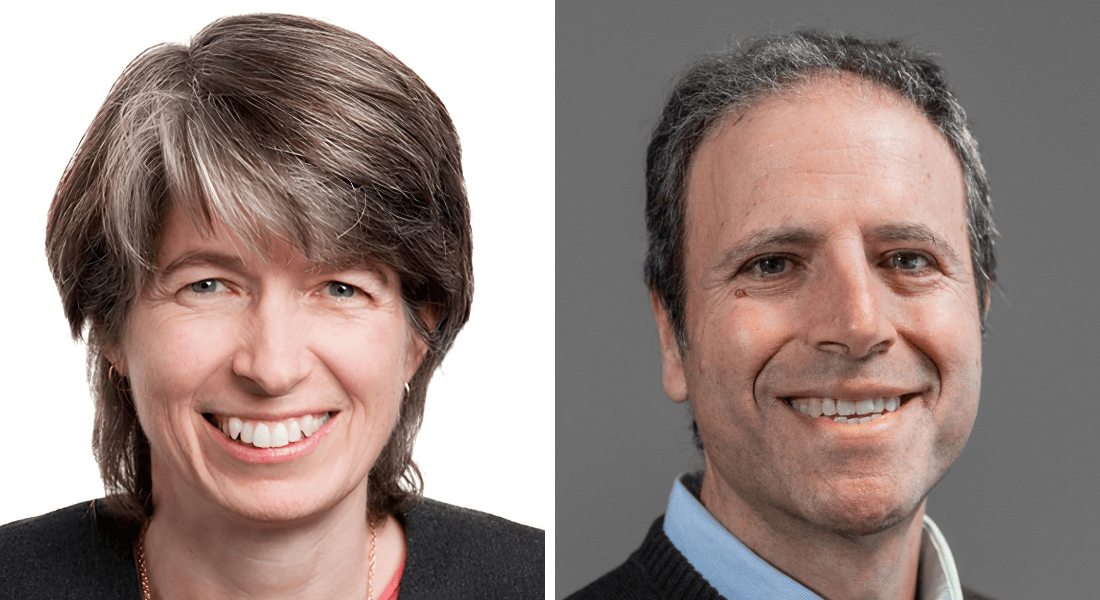
The two honorary doctorates will be conferred at the University of Copenhagen's Annual Commemoration on 13 November.
Fiona Gribble: Unravelling the biology of gut hormones
Fiona Gribble is Professor of Endocrine Physiology and Deputy Director of the Metabolic Research Laboratories at the University of Cambridge. She is one of the world's leading researchers studying the gut hormone system.
At the beginning of the millennium, she developed mouse models that, for the first time, made it possible to isolate enteroendocrine cells and carry out detailed molecular studies. She was the first to map how so-called L cells regulate the secretion of GLP-1, the hormone that underpins many of the medicines now used to treat type 2 diabetes and obesity, including Wegovy and Ozempic.
Since then, Professor Gribble and her research group have developed increasingly sophisticated models to uncover the mechanisms that regulate satiety, energy balance and metabolism, with a particular focus in recent years on human intestinal organoid models.
She is nominated for the honorary doctorate by Jens Juul Holst, Professor and Group Leader at the Department of Biomedical Sciences. He emphasises that Gribble's work has been invaluable to the research groups working in incretin physiology at the University of Copenhagen, including his own efforts to translate the discovery of GLP-1 into new therapies.
- An important, shared interest between Copenhagen and Cambridge has been the challenge of accurately identifying and measuring gut hormones. The Cambridge group developed a technology that can measure these hormones in their fully intact and biologically active form, whether in tissues, fluids and cell supernatants. Through a strong and productive collaboration, it has been possible to transfer the technology to Copenhagen, and we continue to work closely together to make the measurements even more accurate and reliable, says Jens Juul Holst.
Today, the research groups at the and the also collaborate closely on a range of projects. Gribble's group contributes expertise in human organoid models, while the Copenhagen groups contribute with results from the detailed physiological and clinical models.
Frank Caruso: Leading advances in nanomedicine and drug delivery
Professor Frank Caruso is Professor in the Department of Chemical Engineering at the University of Melbourne and Head of the Caruso Nanoengineering Group. His work focuses on targeted drug delivery, and his research in colloid and interface science has helped pave the way for modern nanomedicine.
His contributions to the field include the development of responsive Layer-by-Layer particles that release their therapeutic cargo in response to specific biological stimuli, such as particular enzymes; compartmentalised artificial cells, known as capsosomes, capable of transporting and releasing multiple drugs in a precisely controlled sequence; and biodegradable delivery systems known as Metal-Phenolic Networks, which dissolve completely after delivering their payload to the target cell.
Alongside his research, Professor Caruso has worked throughout his career to translate fundamental scientific discoveries into industrial and medical applications. He is co-founder of two biotechnology companies and serves as an advisor to several organisations in both Australia and Europe.
For the past nine years, he has been a member of the Scientific Advisory Board of the LEO Foundation Center for Cutaneous Drug Delivery at the Department of Pharmacy, a role he has fulfilled with remarkable dedication, according to Professors Jukka Rantanen and Martin Malmsten, Head and Deputy Head of the Department, respectively. In their nomination of Professor Caruso for the honorary doctorate, they write:
- Professor Caruso combines research of the highest international calibre with a strong commitment to the scientific community. He contributes not only through his own research achievements, but also through leading roles in scientific journals, international expert panels and advisory boards. This makes him a role model for researchers at all career stages and a scientist who helps shape the development of his field far beyond the boundaries of his own laboratory.
Guest Lecture by Frank Caruso
The Department of Pharmacy will host a guest lecture by Professor Frank Caruso on 12 November at 1 p.m. in Auditorium 3, Universitetsparken 2. The lecture will be followed by an informal reception.